
Column
What is the Non-contact sensor?
The detailed explanation about constructions, types, advantages of utilization and features of the Opto sensor
Release date: 2026/03/25
Update date: 2026/03/25
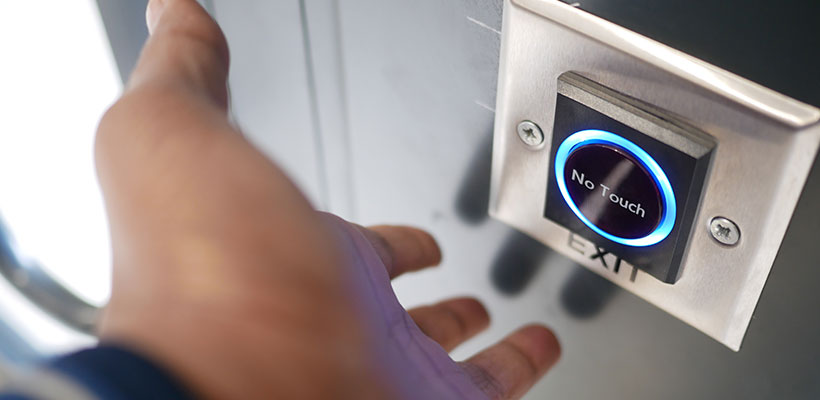
What is the Non-contact sensor? The detailed explanation about constructions, types, advantages of utilization and features of the Opto sensor
“What is the Non-contact sensor specifically?”
“It’s difficult to understand each principle and difference because there’re many types”
“What should we do for selecting the best Non-contact sensor to solve our company’s problems?”
The Non-contact sensor is a technology that detects the situation without touching objects and it’s an essential device in our modern society ranging from the factory automation to products familiar to us.
However, it’s not easy to select the best sensor which is suitable for the purpose because there’re a wide range of types and principles such as the one using the light and the one using the ultrasonic waves and the electromagnetism.
In this article, we’re going to explain comprehensively types and specific usage examples of Non-contact sensors and points to select them.
- Basic constructions and advantages of the utilization
- Features of major Non-contact sensors
- Specific usage examples in various industries
After reading this article, you will understand the world of complex Non-contact sensor. This helps you finding the best device for your purpose so we hope you will read at the end.
目次
Advantages of the utilization
of the Non-contact sensor
In this section, we’re going to explain advantages of the utilization of the Non-contact sensor
- It’s not necessary to touch detected objects
- It’s possible to detect regardless of the condition of the object
- It’s possible to response fast
We will explain each one simply.
1.It’s not necessary to touch detected objects
・The biggest advantage of the Non-contact sensor is that it’s not necessary to touch detected objects physically.
・It can detect objects that are difficult to touch directly such as electronic components that are easy to get damaged or deformed by contacts and hazardous materials.
・The sensor itself also has an advantage of reducing the maintenance frequency and costs due to its high durability with no wear or damage by contacts between the sensor and the object.
・It’s also suitable for using it under the environment requiring cleanliness like the clean room because no wear debris is generated. It can be said that the detection method which is gentle on both the object and the sensor makes a significant contribution to improve the quality control and the production efficiency.
2.It’s possible to detect regardless of the condition of the object
・There is also the Non-contact sensor that is less affected by conditions such as the color and the material of the object. For example, the Capacitive sensor can detect not only the metal but also the resin and the liquid and the Ultrasonic sensor can detect objects with the complex shape such as the transparent glass and the liquid surface.
・In addition, the Distance setting sensor, a kind of the Photoelectric sensor, is less affected by the background object and it can reduce the detection distance fluctuation due to the difference of the object’s color and material.
・It can be said that it’s a very important advantage in the modern manufacturing industry that the detection of many types is required due to its high versatility that can be used for any object.
3.It’s possible to response fast
・The Non-contact sensor also has the advantage that the response time to the detection signal is extremely fast.
・In many cases, it achieves the response time in milliseconds or less and it performs at its best to detect fast-moving objects.
・Parts and products move faster than the eye can see in the electronic component mounting machine, the packing machine and the printing machine. However, it’s possible to position accurately, count the number and sort out defective products due to the fast response of the Non-contact sensor.
・This fast response directly leads to the reduction of the tact time (the manufacturing time for one product) and the improvement the throughput (the data volume and workload that can be processed within a certain time).
・Especially when it’s used as the safety equipment, it can be said that this fast response is a very important element to stop the machine by sensing the danger immediately.
Types of the Non-contact sensors
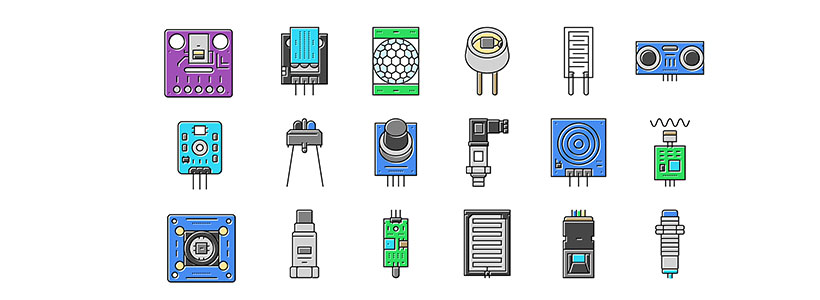
The Non-contact sensor has a wide variety of types and each one detects the object with different principles. In this section, we’re going to explain representative Non-contact sensors.
- The Opto sensor (Photosensor)
- The Pyroelectric sensor
- The Capacitive sensor
- The Magnetic proximity sensor
- The Ultrasonic sensor
- The Image discrimination sensor
- The Temperature sensor (Thermal sensor)
You will get the knowledge required to select by understanding each sensor’s feature.
The Opto sensor (Photosensor)
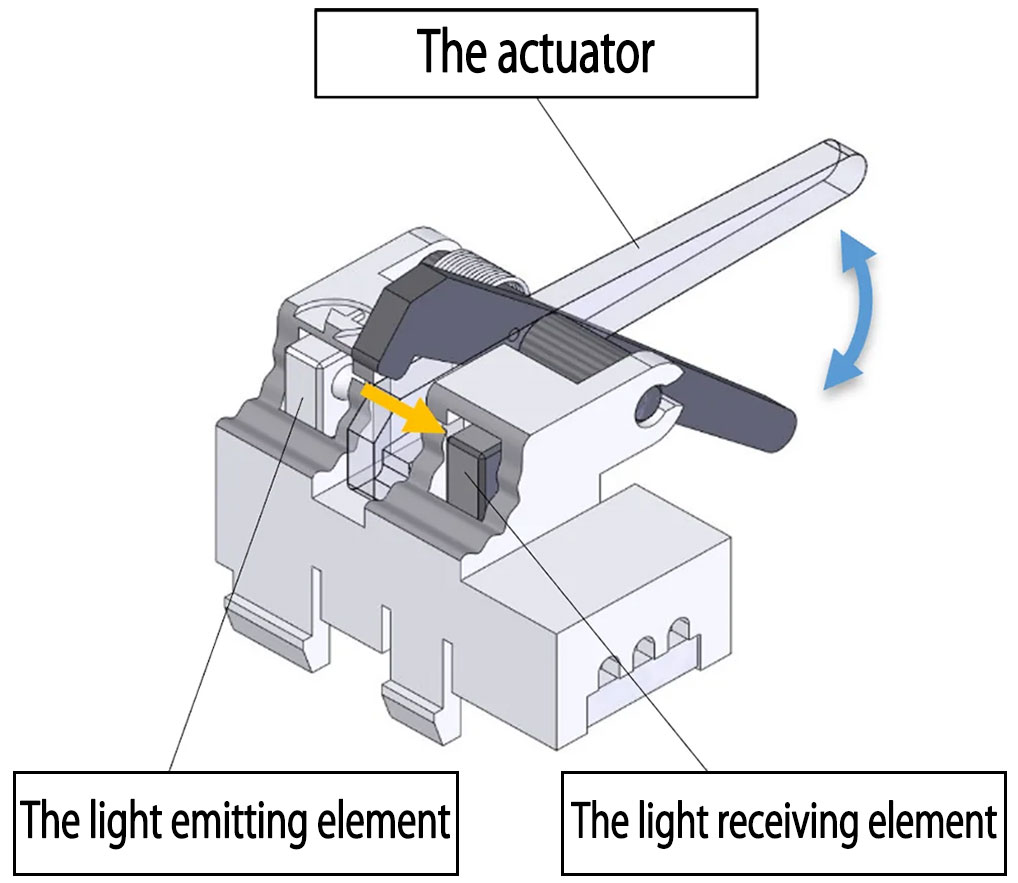
・The Opto sensor (Photosensor) is a general term for the sensor detecting the presence or absence, the passing, the color and surface condition of the object by using lights such as the visible light and IR.
・The light flooded from the emitter detects the change in the light intensity when be reflected or blocked by the detected object at the receiver and changes it to the electrical signal.
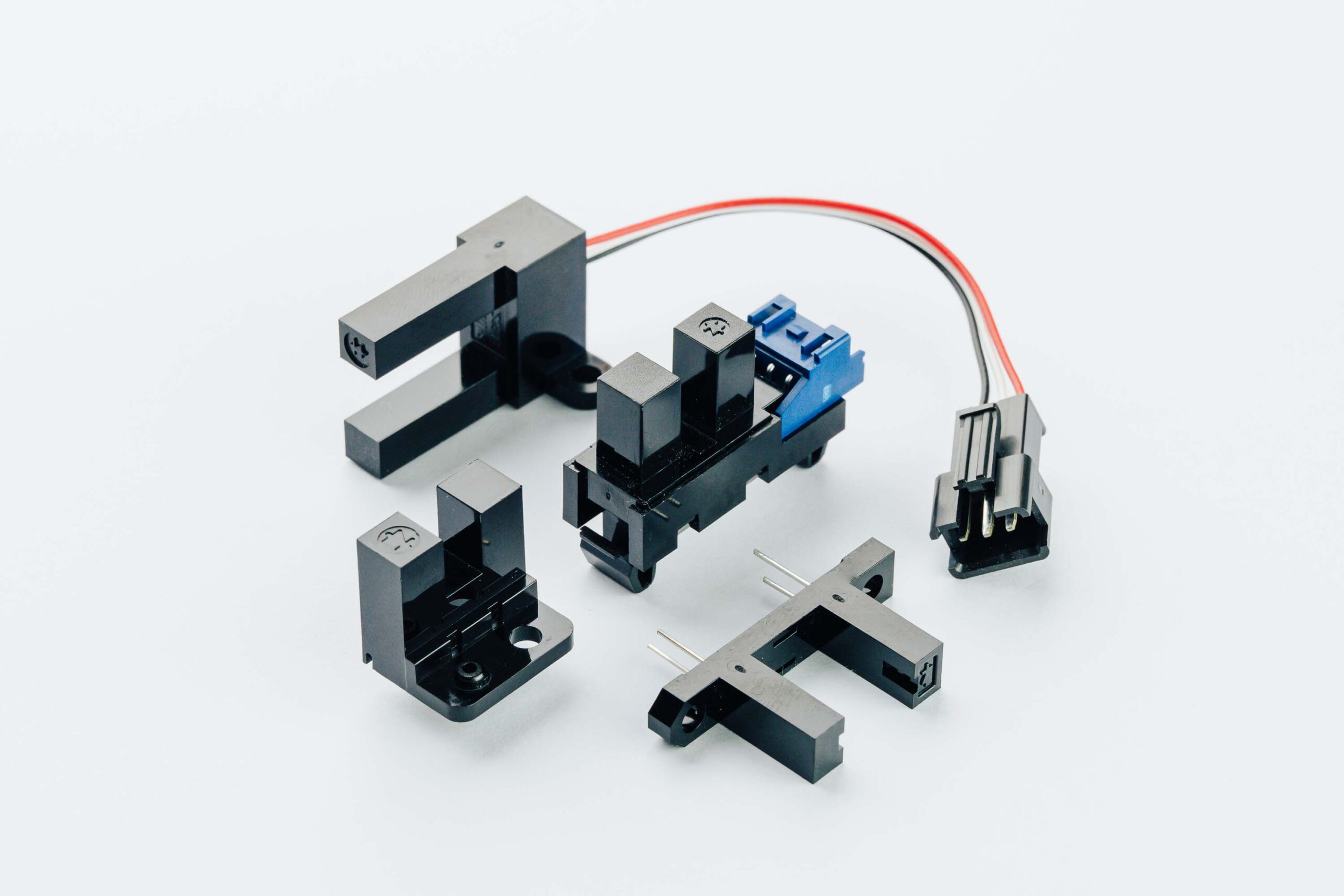
・Typical examples of the detecting method include the transmissive type that the emitter and the receiver face each other and the reflective type that the emitter and the receiver are integrated and detects the reflected light from the object.
・The feature of the Opto sensor is high versatility that can detect most objects such as the metal, the resin, the glass and the liquid. There are a wide variety of products such as the one can make the detection distance relatively long and the one can detect micro objects.
・It’s used in a wide range of purposes like the part detection on the production line.
※GO to the article “What is the Opto sensor” ▶▶▶
The Pyroelectric sensor
・The Pyroelectric sensor is the sensor that captures changes in IR emitted by human bodies and animals and detects the existence and the movement.
・The core of the sensor is the pyroelectric element with the feature that the surface charge changes in response to temperature changes. Temperature changes are occurred by applying IR energy emitted by the object to the pyroelectric element and it detects the resulting change in the electrical signal.
・The major feature of the pyroelectric element is detecting the moving of the object with the temperature regardless of the surrounding brightness.
・It’s widely used as the alarm system and the automatic lighting for the crime prevention and the activation sensor of the automatic door.
・It’s suitable for detecting the moving object due to its feature that it’s difficult to detect when the object is at rest.
The Capacitive sensor
・The Capacitive sensor is the sensor that detects changes of the capacitance (an ability to store the electricity) formed between the detection electrode of the sensor and the object and the approach or the contact of the object.
・After the object enters into the high frequency electric field generated on the detection electrode, the capacitance changes depending on the dielectric constant, the size and the distance. It determines the presence and or absence and the location of the object by regarding this change as the frequency and amplitude change in the oscillator circuit.
・It can be said that the touch screen of smartphones and tablets is a representative implementation example of the Capacitive sensor, which detects the minute change in capacitance caused by a finger touching the screen.
・It also has the advantage that it can detect not only the metal but also non-metal substances such as the resin and the liquid and the insulator.
The Magnetic proximity sensor
・The Magnetic proximity sensor is the sensor that detects the approach of the magnet and the magnetic material.
・The general type is the combination of the hall element and the permanent magnet. The hall element is an element detecting the magnetic field by using “the hall effect”.
・In the hall sensor, there are “the analog hall sensor” that outputs the voltage corresponding to the magnetic field strength and “the digital hall sensor” that determines the presence or absence of the magnetic field by ON/OFF.
・Though it can’t detect the non-magnetic material because the detection target is limited to the magnet or the ferromagnetic material, it’s utilized in many industrial fields due to its reliable operation and its environmental resistance.
The Ultrasonic sensor
・It’s the Ultrasonic sensor that measures the distance to the object and detects the presence or absence of the object by using the high frequency sound waves that humans can’t hear (the ultrasound). It’s mainly utilized to measure the liquid level in tanks and detect vehicles in parking lots.
・Its advantage is that it can detect virtually unaffected by the color, the transparency and the material.
・On the other hand, it’s unsuitable for detecting the sounds-absorbing material and the fast-moving object.
・Therefore, it’s suitable for detecting the material that the Opto sensor has difficulty to detect such as the transparent glass or the liquid surface.
The Image discrimination sensor
・The Image discrimination sensor is the sensor that recognizes and identifies the presence or absence, the shape and the color of the object by processing the image information taken with the camera.
・The major feature is not only detecting the object but also conducting the detailed inspection of “contents” and “conditions”.
・The complex inspection and the identification task can be automated because it can handle a huge amount of information compared with other sensors. For example, it’s extremely widely available such as the inspection of product’s scratches and dirt, Optical Character Recognition (OCR) and scanning barcodes and QR codes.
・On the other hand, there’re also the feature that its introduction cost is relatively expensive and proper lighting settings are required for the high accurate detection.
・Please consider whether you introduce it or not with the understanding of not only advantages but also these features.

The comparison of representative Non-contact sensors
The Non-contact sensor has different features in the detection method and the accuracy. The table of each difference with the comparison of representative Non-contact sensors is below.
| Comparison items | Opto sensor | Capacitive sensor | Ultrasonic sensor | Magnetic proximity sensor |
| Detection method | It detects reflecting and blocking of the light and the transparency | It detects changes in the electric field | It measures the reflection time of the sound wave | It detects changes in the magnetic field |
| Accuracy | Extremely high accuracy | Intermediate (it’s stable at the short distance) | Intermediate to High (it’s good with the distance measurement) | High accuracy (it’s good with the position detection) |
| Detection distance | A few mm to several tens of meters (it depends on types) | A few mm to a few cm | A few cm to a few m | A few mm to a few cm |
| Environmental adaptability | There are cases in which it’s not good with the light, the dust, and the transparent object | It’s relatively good with the humidity and the dust | It’s good with the dark place and the dust but not the sound-absorbing material | It’s less affected by the light and the dust |
| Cost | Inexpensive to Expensive (it has a wide range depending on purposes | Inexpensive | Intermediate | Intermediate |
| Application examples | The face recognition, the object detection, the automatic door, LiDAR and etc. | The touchless switch The liquid level detection | The obstacle detection The distance measurement | The position detection The rotation detection |
Shown in the table above, each Non-contact sensor has different detection method and accuracy.
In addition, you can see cases where the Opto sensor is particularly effective as below.
| Usage scene,Purpose | Reason, Advantage |
| Automatic door, Elevator | It can detect the passage of objects immediately. The response speed is fast with a few malfunctions. |
| Distance measurement | The high-accuracy distance measurement to several tens of meters is available. It’s best for robots and self-driving cars. |
| Production line | It detects the passage and the position of products accurately. It’s available even in the high-speed line. |
| Detection of transparent objects | It can also detect the glass and the film with special Opto sensors (the polarization, IR). |
| Detection of objects in indoor environment | The extremely accurate and stable detection is available in the environment with the stable light. |
| Color identification, Quality inspection | It determines the color difference and the surface condition by the reflection of the light. It’s effective for the inspection of food, cosmetics and electronic components. |
Please consider products that are suit for your company’s situation because the best Non-contact sensor is different in each usage case and purpose.
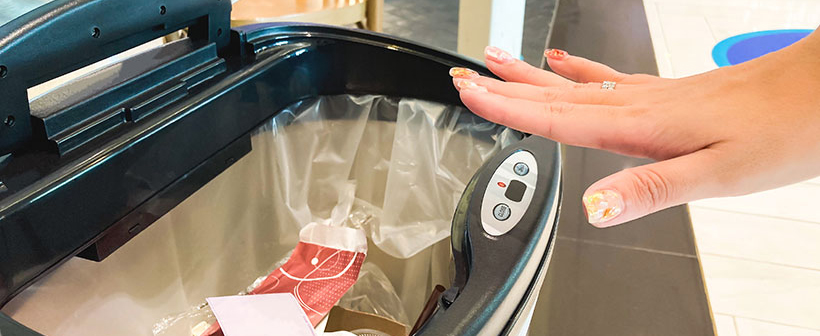
Implementation examples of the Opto sensor (Photosensor) used in our everyday life
The Opto sensor is used in various fields in our everyday life and it improves the convenience and the safety in our daily life.
We’re going to explain how the Opto sensor is implemented in this section.
- The financial industry
- The medical industry
- The amusement equipment industry
You will understand how to use it to your business after knowing implementation examples in each field.
The financial industry
・The Opto sensor in the financial industry greatly contributes to improve the accuracy of the bill validation and authentication.
・In ATM and the bill counter, the authenticity judgement and the type identification are available by the high-accuracy detection of reflection properties and the transmittance of the ink included in the bill.
・The Opto sensor using UV and IR instantly identifies the presence or absence of the security ink and the special printing and prevents the distribution of counterfeit bills.
The medical industry
・In the medical industry, it contributes to place less strain on patients and improve the accuracy of the diagnosis and the treatment.
・The representative implementation example is the Non-contact thermometer. It can measure the body temperature by detecting IR emitted from the forehead and the ear with the thermal sensor. So, it’s widely utilized for infectious disease countermeasures in order to avoid the risk of the infection through the contact.
・The technology of the high-accuracy Opto sensor is also introduced to the patient positioning in the diagnostic imaging equipment such as MRI and the CT scanner.
The amusement equipment industry
・In the amusement equipment industry, the Opto sensor is utilized as an essential technology in a wide range of purposes such as the equipment operation control, the improvement of the performance effect and the detection of the player’s operation.
・Especially in gaming machines such as the pachinko and the slot machine, they have many built-in Opto sensors that support the game progress and the accurate judgement.
・In the pachinko, the Opto sensor counts shot balls accurately and determines the specific route passage.
・Same as in the slot machine, the high resolution Opto sensor is used for the accurate detection of the real rotation and the stop position.
・In addition, the high durability is also one of the reasons to be adopted because it’s contactless.
・With these functions of the sensor, it plays an important role in supporting the root of the amusement equipment by both ensuring the fairness of games and captivating players with a variety of effects.
Please contact us, Shinkoh Electronics CO.,
LTD for the Opto sensor among
the Non-contact sensor
・The Non-contact sensor has the great advantage that it can detect without touching the object and contributes to improve the convenience of our daily life by the industrial automation.
・We should understand each ability and purpose when we select because there’re variety of types based on several principles such as the light, the electromagnetism and the ultrasound.
・Please select the best Non-contact sensor for your business referring to this article.
-
2026/03/25
What is the transmissive type Photosensor (Photointerrupter)?The detailed explanation about features and implementation examples
academy
-
2025/12/10
What is Opto sensor
academy
- Column Category
- Tags
- Recommended Articles
-
-
 2026/03/25 What is the Non-contact sensor?
The detailed explanation about constructions, types, advantages of utilization and features of the Opto sensor -
2026/03/25 What is the transmissive type Photosensor (Photointerrupter)?The detailed explanation about features and implementation examples
-
2025/12/10 What is Opto sensor
-
